Thesis
Until now, putting the written record on screen meant either a studio budget or dramatic licence, and almost everyone chose licence. Generative tools have removed the cost of fidelity. RESPONSUM is the proof: history can be dramatised close to the record, in the languages it was spoken in, and one person can now do it.
The film is also its own subject. It is about the man who, by tradition, first wrote Rome's history down, made with the first tools that let one person film Rome. When Pictor dictates the oracle's answer on the deck of the ship home, we are watching the first Roman history being made, in a film that is itself a new way of recording.
The story
216 BC. In the consulship of Varro and Paullus the Roman army was destroyed at Cannae. The senate sent Quintus Fabius Pictor to Delphi to ask the god two things: with what prayers the gods might be appeased, and what would be the end of such disasters. Pictor is regarded as Rome's first historian. This film is his journey, taken from Livy.
Livy composed his history of Rome under Augustus, two centuries after Cannae, from the annals of the priests, the acts of the senate and the historians before him. The first of those historians was Quintus Fabius Pictor: a senator who had fought in the Gallic war, who was sent to Delphi in the worst year of the Republic, and who afterwards wrote, in Greek, the first account of Rome by a Roman. His history is lost. Livy read it and used it as a primary source. What Livy tells of the year 216 comes, in large part, from Pictor.
So the film has a double subject: the mission, and the man who would write it down.
Five movements
I · CANNAE Livy XXII 49, 54The last exchange between the tribune Lentulus and the dying consul Paullus, and Livy's judgement on the day.
II · ROME XXII 55, 57The senate in the Curia Hostilia: Fabius Maximus's measures, the decision to send Pictor to Delphi.
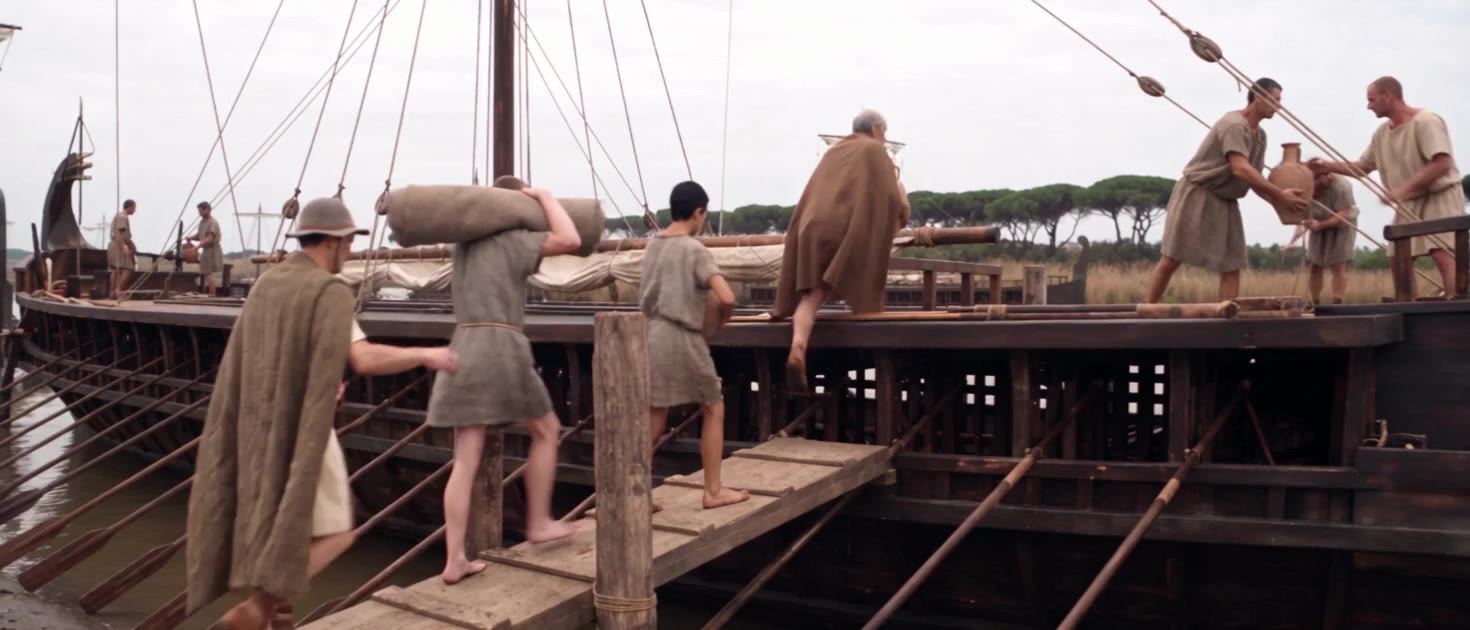
III · THE JOURNEY XXII 57Ostia to Cirrha by sea, the gulf of Corinth, Mount Parnassus, the Sacred Way up to the temple. Here the film takes its one dramatic liberty: Pictor's vow to his Greek slave Philon that if the mission succeeds, Philon will be freed and will help him write the history of the Roman people in Greek. Livy does not record this. It is the film's way of putting the historian's purpose on screen.
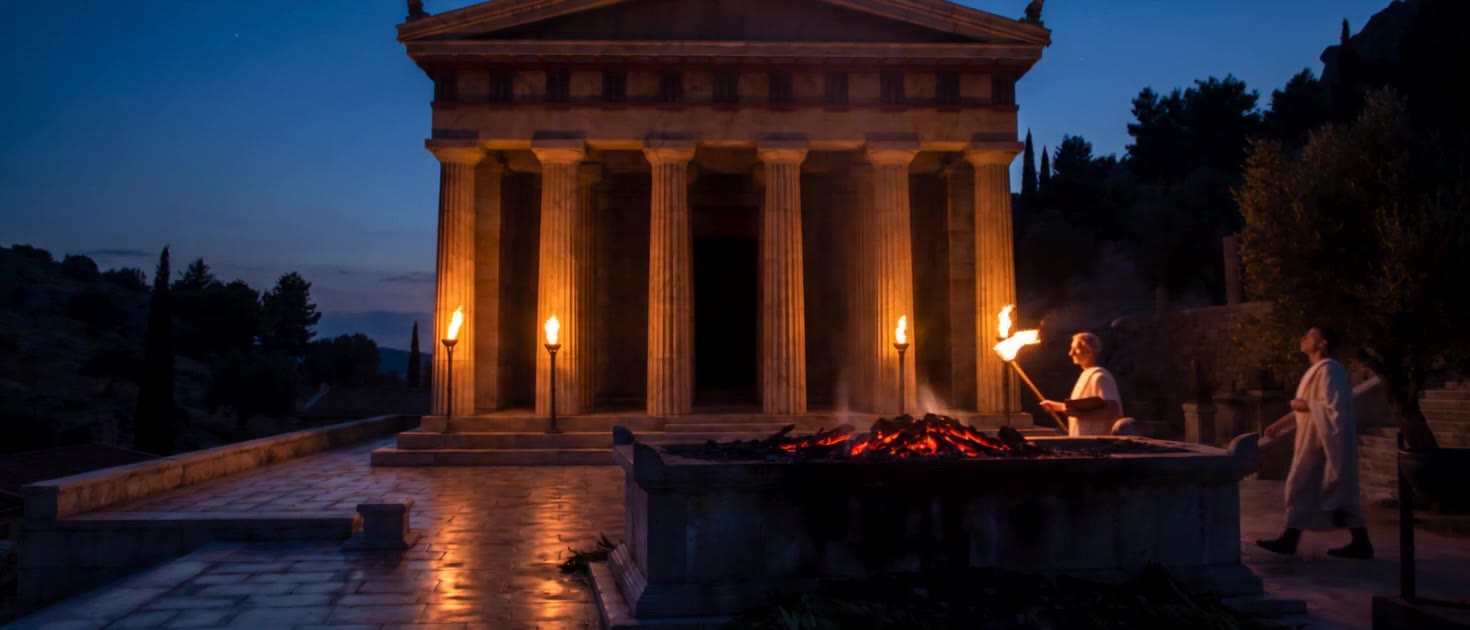
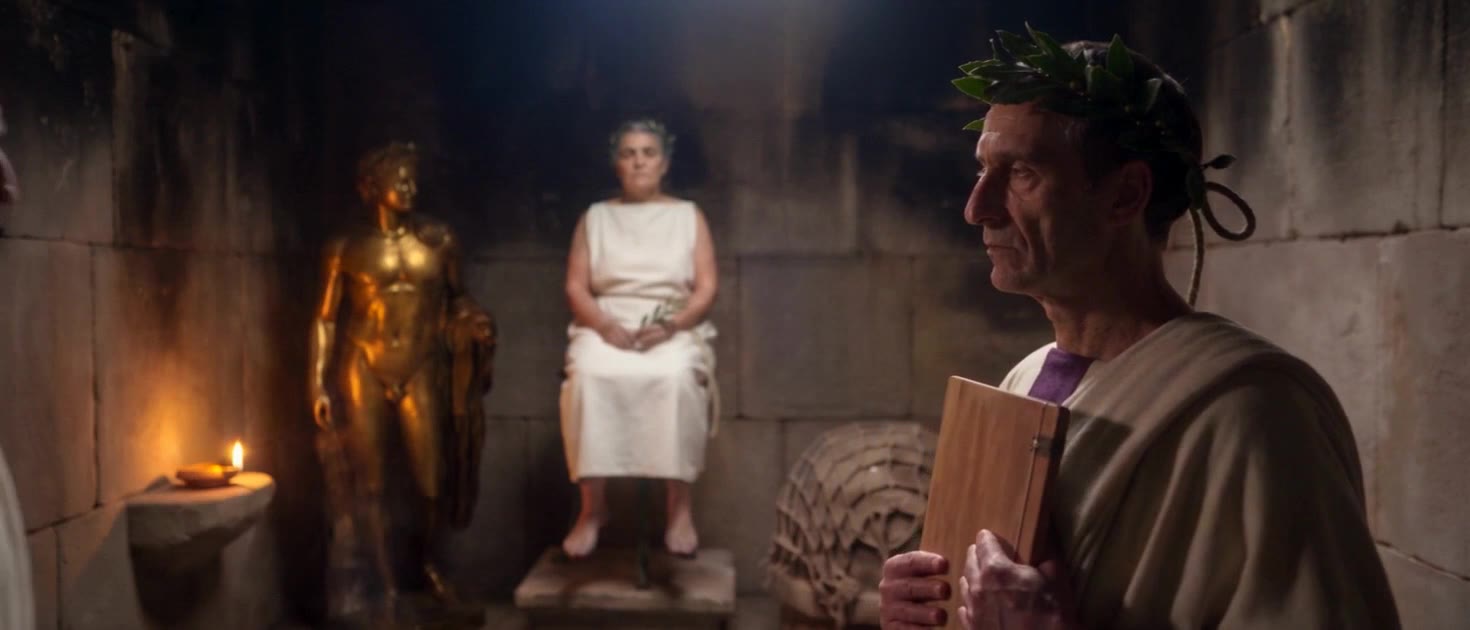
IV · DELPHI XXIII 11; Plutarch; Pausanias X 24The auspices with the goat at the altar before dawn, the three maxims cut into the porch, the question and the answer in the adyton, the laurel crown and the priest's order to wear it until Rome. The Pythia's response is Livy's text rendered back into Greek. Livy says he read it ex Graeco carmine interpretata, translated from the Greek verse; the film restores the Greek.
V · THE RETURN XXIII 11On the ship, Pictor dictates the response in Latin to Philon. The oracle's words are heard twice: received in Greek in the temple, recorded in Latin on the deck, for the senate to hear on the return. The film ends as Pictor lays the crown on the altar of Apollo in Rome.
What is on screen
The languages. Latin in Rome and on the ship. Greek on the road, on the quay and inside the temple. Latin, Greek, Latin: the question crosses the language line going in, the answer crosses it coming out. The subtitles are the only English in the film.
The Pythia. As Plutarch describes her: a plain woman of the town past fifty, seated on the tripod, speaking in her own voice. No vapour, no frenzy, no rolling eyes; the sources for those are later and not founded in contemporary accounts. She never looks at Pictor. The priest, not the Pythia, gives the order about the crown, as Livy has it.
The porch. ΓΝΩΘΙ ΣΑΥΤΟΝ · ΜΗΔΕΝ ΑΓΑΝ · ΕΓΓΥΑ ΠΑΡΑ Δ' ΑΤΑ and the E, cut in the anta wall as Pausanias and Plato record them. Pictor reads them before entering the temple.
The look. Kodak 5247 colour negative, overexposed: fine real grain, warm-neutral colour, a restrained palette, soft highlight roll-off, nothing glossy. Locked-off frames; no camera moves except where the Sacred Way demands one. 21:9 throughout.
The cards. Every title card is a quotation from Livy, in Latin, with the English beneath, set in Cinzel and EB Garamond. The only cards that are not Latin quotations are the prologue and the epilogue.
The music. Solo seven-string kithara, bare gut strings, plectrum-plucked, long silences, Dorian and Phrygian modes. The music is for drama and it is anachronistic: harmony of this kind would have been foreign to the ancient ear, whose rules were entirely different from ours.
Historical accuracy
What draws me to ancient history is that these myths might be real events. We cannot know for certain, but these are the stories the historians told, and the question that drives the work is simply: what happened? I think we can be reasonably confident that what Livy reports here is real: that Pictor went to Delphi, saw the oracle, and wrote it down. That, to me, is epic. Nobody can know what it looked like, but this film is my attempt at showing it, with enough drama to carry it.
The aim is a depiction of Rome and Delphi in 216 that a historian would not have to forgive too much. It is very hard to get completely right with these tools. There are anachronisms in the generated image that most viewers will never see, and a few I chose to accept for the sake of the scene. The three maxims in the porch are as Pausanias and Plato record them, though whether Pictor read them on the anta wall or elsewhere in the sanctuary no one knows. The Pythia is shown as Plutarch describes her.
The dialogue is in Latin and Ancient Greek. The Latin is Livy's; the Greek in the temple is Livy's Latin rendered back into the language it came from; the small exchanges on the road and the quay are ours, kept to the kind of thing that would have been said.
Key decisions
- The storyline, the title cards and the central speeches are taken from Livy; much of the rest is invented, kept within what the record allows. The largest invention is Philon, his role in Pictor’s writing, and the vow of manumission.
- The oracle's response is heard twice: in Greek, received; in Latin, dictated. That repetition is the film.
- No voice-over after Pictor is introduced in the senate.
- The record over the better drama: the film's subject is an attempt at the truth as the sources give it, not the later mythical inventions. The Pythia without vapour and trance is the clearest case.
- The closing card says only what is true: Hannibal was defeated fourteen years later; Pictor became the first historian of Rome; his work is lost. Fragments survive in later authors.
Production
One person, start to finish, over seven days: research, script, prompts, generation, edit, sound, subtitles, mastering. A character and location bible built first and reused in every shot; every shot written as a structured prompt; generated, judged against the bible, and reworked until it held. The cut is where most of the work went: dialogue level-matched to a common loudness before any join, every join a crossfade of room tone into room tone, the master assembled sample-exact so no boundary is audible. Close to a thousand generations for fourteen minutes.
Generation on Seedance through Higgsfield at 21:9; characters, locations and elements built as reusable references; music generated in Suno; the edit, mix and subtitles in a pipeline of my own.
What I learned
- Reference lines must copy the bible descriptor word for word. A paraphrase changes the character.
- Prepare every scene with every element it needs, environments and props included, or consistency breaks between shots.
- Compositions must be stated: where each person stands or sits. A keen eye sees people change places between cuts.
- "Continues after" references carry the previous clip's defects forward, including flaws in the soundscape already edited out.
- Generated audio makes assumptions about a setting that are hard to prompt away: horse sounds for a donkey, church bells in a temple.
- Give every group in a frame a verb. "The crowd holds still" freezes the whole frame.
- Level-match every dialogue clip before the cut. Takes of the same character in the same room vary by six decibels.
Ex Livio
The passages the film is made from.
Cn. Lentulus tribunus militum cum praetervehens equo sedentem in saxo cruore oppletum consulem vidisset, "L. Aemili" inquit, "quem unum insontem culpae cladis hodiernae dei respicere debent, cape hunc equum, dum et tibi virium aliquid superest et comes ego te tollere possum ac protegere. Ne funestam hanc pugnam morte consulis feceris; etiam sine hoc lacrimarum satis luctusque est." Ad ea consul: "Tu quidem, Cn. Corneli, macte virtute esto; sed cave, frustra miserando exiguum tempus e manibus hostium evadendi absumas. Abi, nuntia publice patribus urbem Romanam muniant ac priusquam victor hostis adveniat praesidiis firment; privatim Q. Fabio L. Aemilium praeceptorum eius memorem et vixisse adhuc et mori. Me in hac strage militum meorum patere exspirare …" Haec eos agentes prius turba fugientium civium, deinde hostes oppressere; consulem ignorantes quis esset obruere telis, Lentulum in tumultu abripuit equus.
Gnaeus Lentulus, a military tribune, riding past, saw the consul sitting on a stone, covered in blood. "Lucius Aemilius," he said, "whom alone the gods should regard as guiltless of today's disaster, take this horse, while you still have some strength and I can lift you up and protect you. Do not make this battle mournful by the death of a consul; without that there are tears and grief enough." The consul answered: "Honour to your courage, Gnaeus Cornelius. But take care not to waste in useless pity the little time you have to escape the enemy's hands. Go. Tell the senate publicly: fortify the city, and secure it with garrisons before the victorious enemy arrives. Tell Quintus Fabius privately that Lucius Aemilius remembered his counsel, living and dying. Let me die here, in the slaughter of my men …" While they spoke, first the crowd of fleeing citizens and then the enemy overwhelmed them. Not knowing who the consul was, they buried him under missiles. Lentulus's horse carried him off in the confusion.
Nulla profecto alia gens tanta mole cladis non obruta esset. No other nation, surely, would not have been crushed by a disaster of such weight.
P. Furius Philus et M. Pomponius praetores senatum in curiam Hostiliam vocaverunt, ut de urbis custodia consulerent … Cum in malis sicuti ingentibus ita ignotis ne consilium quidem satis expedirent obstreperetque clamor lamentantium mulierum … tum Q. Fabius Maximus censuit equites expeditos et Appia et Latina via mittendos, qui obvios percontando … referant quae fortuna consulum atque exercituum sit … quo se Hannibal post proelium contulerit … illud per patres ipsos agendum … ut tumultum ac trepidationem in urbe tollant, matronas publico arceant … comploratus familiarum coerceant, silentium per urbem faciant … custodesque praeterea ad portas ponant qui prohibeant quemquam egredi urbe.
The praetors Publius Furius Philus and Marcus Pomponius called the senate to the Curia Hostilia to consult on the defence of the city … Amid evils so great and so unknown they could not even settle on a plan, and the clamour of wailing women drowned them out … Then Quintus Fabius Maximus proposed that light horsemen be sent out along the Appian and Latin roads to question whomever they met … and report what had become of the consuls and the armies … and where Hannibal had gone after the battle … The rest the senators must do themselves: put down the tumult and panic in the city, keep the married women off the streets … restrain the lamentation of households, make silence throughout the city … and post guards at the gates to prevent anyone from leaving.
Inde dictator ex auctoritate patrum dictus M. Iunius et Ti. Sempronius magister equitum dilectu edicto iuniores ab annis septemdecim et quosdam praetextatos scribunt; quattuor ex his legiones et mille equites effecti … Arma, tela, alia parari iubent et vetera spolia hostium detrahunt templis porticibusque. Et aliam formam novi dilectus inopia liberorum capitum ac necessitas dedit: octo milia iuvenum validorum ex servitiis, prius sciscitantes singulos vellentne militare, empta publice armaverunt.
Then Marcus Iunius, named dictator by the authority of the senate, and Tiberius Sempronius, master of the horse, proclaimed a levy and enrolled the young men from seventeen years and some still in the boy's toga; from these four legions and a thousand horse were made … They ordered arms, weapons and the rest to be made ready, and took down the old spoils of the enemy from the temples and porticoes. And the shortage of free men and necessity gave the levy a new form: eight thousand strong young slaves, each first asked whether he was willing to serve, were bought at public expense and armed.
Territi etiam super tantas clades cum ceteris prodigiis, tum quod duae Vestales eo anno, Opimia atque Floronia, stupri compertae et altera sub terra, uti mos est, ad portam Collinam necata fuerat, altera sibimet ipsa mortem consciverat … Hoc nefas cum inter tot, ut fit, clades in prodigium versum esset, decemviri libros adire iussi sunt et Q. Fabius Pictor Delphos ad oraculum missus est sciscitatum quibus precibus suppliciisque deos possent placare et quaenam futura finis tantis cladibus foret. Interim ex fatalibus libris sacrificia aliquot extraordinaria facta, inter quae Gallus et Galla, Graecus et Graeca in foro bovario sub terram vivi demissi sunt in locum saxo consaeptum, iam ante hostiis humanis, minime Romano sacro, imbutum.
They were terrified, beyond such disasters, by the other prodigies and by this: that two Vestals in that year, Opimia and Floronia, had been found unchaste, and one had been put to death under the earth at the Colline Gate, as the custom is, and the other had killed herself … When this crime, among so many disasters, had been turned, as happens, into a prodigy, the Ten were ordered to consult the Books, and Quintus Fabius Pictor was sent to the oracle at Delphi to ask with what prayers and supplications they might appease the gods, and what would be the end of such disasters. Meanwhile, out of the Books of Fate, certain extraordinary sacrifices were performed, among which a Gaulish man and woman and a Greek man and woman were put down alive under the earth in the cattle market, in a place walled with stone that had before been stained with human victims: a rite not Roman at all.
Dum haec geruntur, Q. Fabius Pictor legatus a Delphis Romam rediit responsumque ex scripto recitavit. Divi divaeque in eo erant quibus quoque modo supplicaretur; tum: "Si ita faxitis, Romani, vestrae res meliores facilioresque erunt magisque ex sententia res publica vestra vobis procedet victoriaque duelli populi Romani erit. Pythio Apollini re publica vestra bene gesta servataque lucris meritis donum mittitote deque praeda manubiis spoliisque honorem habetote; lasciviam a vobis prohibetote." Haec ubi ex Graeco carmine interpretata recitavit, tum dixit se oraculo egressum extemplo iis omnibus divis rem divinam ture ac vino fecisse, iussumque ab templi antistite, sicut coronatus laurea corona et oraculum adisset et rem divinam fecisset, ita coronatum navem adscendere nec ante deponere eam quam Romam pervenisset; se, quaecumque imperata sint, cum summa religione ac diligentia exsecutum coronam Romae in aram Apollinis deposuisse. Senatus decrevit ut eae res divinae supplicationesque primo quoque tempore cum cura fierent.
While these things were happening, Quintus Fabius Pictor returned to Rome from Delphi and read the answer from a written text. In it were the gods and goddesses to be supplicated, and in what manner each; then: "If you do these things, Romans, your affairs will be better and easier, and your republic will go forward more as you would wish, and victory in the war will be the Roman people's. When your republic has been well managed and saved, send a gift to Pythian Apollo from your gains, and do him honour from the booty, the spoils and the plunder; and keep wantonness far from you." When he had read this, translated from the Greek verse, he said that on coming out of the oracle he had at once made offering to all those gods with incense and wine; and that he had been ordered by the chief priest of the temple that, as he had approached the oracle and made the offering crowned with a laurel crown, so crowned he should board ship, and not lay the crown down before he reached Rome; and that he had carried out everything commanded with the greatest scruple and care, and had laid the crown at Rome on the altar of Apollo. The senate decreed that those rites and supplications be performed at the first opportunity, with care.
The card that opens the fourth movement is Livy's own description of Delphi, from a later book: the oracle quod umbilicum orbis terrarum, the navel of the world.
Festivals
Entered autumn 2026: Higgsfield Global Film Festival, AI Talents New York, AI Film Festival Japan. Further entries through October.
Sources
Livy, Ab Urbe Condita XXII 7, 36, 49, 54, 55, 57; XXIII 11; XXXVIII 48: the battle's end, the year at Rome, the mission, the response, the return; the epigraph and the Delphi card. Polybius III 107–117: the battle. Plutarch, De defectu oraculorum; De Pythiae oraculis: the procedure at Delphi, the Pythia. Pausanias X 24: the maxims in the temple. Plato, Protagoras 343b; Charmides 164d–165a: the maxims and their attribution to the Seven Sages.
ludwigsandgren.com · ludwig@mysteriom.com